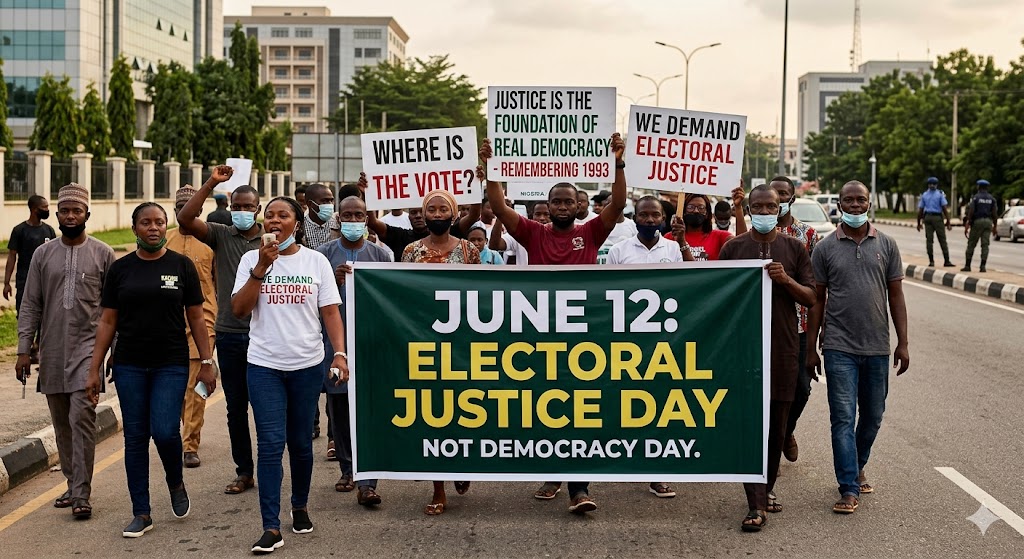
In Celebrology, a celebration is not just given a name without appealing its circumstantial emergence that is, the occurrence that led to the celebration. Any attempt to deviate from it to take another form is called kayanu and by implication, kayanu derails and removes focus from its very precision of intent. The circumstance that led to June 12 struggle is annulment, that is, electoral injustice.
In Nigeria, June 12 is officially recognized and celebrated as Democracy Day but this is kayanu.
Kayanu is a celebration phenomenon in which the naming of a given celebration derails from the circumstance that leads to the celebration in which it becomes very difficult to pass its exact message across to humanity. However, June 12 is frequently described as a symbol of electoral justice by citizens, legal experts, and political analysts.The distinction between its official name and why it is celebrologically viewed as a day of electoral justice stems from the unique historical events surrounding the date.
On June 12, 1993, Nigeria held a presidential election widely acknowledged as the freest, fairest, and most peaceful in the nation’s history. Chief Moshood Kashimawo Olawale (MKO) Abiola, running on a platform that united Nigerians across deep ethnic and religious divides, was the presumed winner. Before the official results could be fully announced, the military regime led by General Ibrahim Babangida arbitrarily annulled the election. This act denied Nigerians their chosen leadership, sparked years of civil unrest, and resulted in Abiola's eventual imprisonment and death.
Why it represents "Electoral Justice" over generic "Democracy"
While the official public holiday is named Democracy Day, the underlying sentiment represents a specific demand for electoral justice for the following reasons:
(i) A Correction of Historical Wrong: For decades, Nigeria marked Democracy Day on May 29 to signify the return to civilian rule in 1999. In 2018, the federal government officially moved the holiday to June 12 and conferred posthumous national honors on MKO Abiola. This shift was a symbolic act of executive and historical justice—belatedly validating the stolen mandate of 1993.
(ii) Focus on the Sanctity of the Ballot: Generic "Democracy" encompasses broad concepts like governance, infrastructure, and freedom of speech. Conversely, "Electoral Justice" focuses strictly on the premise that the sovereign will of the people expressed through their votes must be respected and protected. June 12 stands as a reminder of what happens when that process is corrupted by the ruling class.
(ii) An Ongoing Demand for Credible Polls: Many civil society organizations, such as the Wole Soyinka Centre for Investigative Journalism, emphasize June 12 as a benchmark for electoral integrity. Viewing the day through the lens of electoral justice serves as an annual protest and reminder that Nigeria's modern electoral system still struggles with vote buying, rigging, and judicial interference
On this day, we honour the pro-democracy advocates and activists who sacrificed their lives and freedom following the military annulment of the 1993 mandate. This clearly acts as an annual benchmark for civic groups and human rights commissions to demand transparency, credible elections, and democratic dividends for all citizens.
0 Comments
Leave a Comment